
.svg)



I'm Keshav, product generalist obsessed with how things work & feel.
I'm Keshav, product engineer, designer, manager, all-in-one.
I'm Keshav, product generalist, prototyping with agents, designing with vibes.
I'm Keshav. Currently at Flint, building self-improving agents for performance marketing.


Founding Business Ops at Flint

Founder, built neural interfaces at Neuma

First technical PM at Webflow
.png)

Flint
Founding BizOps · Sept 2026
Currently the founding business operations hire at Flint. We're building self-improving agents for performance marketing, backed by Accel, Sheryl Sandburg's fund, and Neo.
As BizOps, I work at the intersection of operations, strategy, and product, including things like billing, revenue, GTM, hiring, etc.
Neuma
Founder · Decoding the brain · 2023 - 2025

We wanted to build the future interface for agents: a neural interface that let people talk to coding agents without speaking or typing. Keyboard. Mouse. Neuma.
I led product, operations, & design, and built a team of 8. I helped shape the device experience, scaled data collection operations, and led integration across mechanical, electrical, ML, and product.
We raised over $5M and took a sci-fi sounding idea to a working build we could use.
Before Neuma, we built a group buying commerce to let people shop together (2020 to mid-2023). Onboarded bodegas across NYC and hundreds of users.
Webflow
Product Manager · Jan 2019 - Sep 2020
I was the first technical PM hire, joined at seed stage and saw the company grow to Series B, owning the Designer and CMS.
I led the launch of Breakpoints and Prebuilt Layouts, two of the biggest surface areas that are now used by millions of builders on Webflow.
Before consumer-facing products, I led design system and internal DevOps initiatives to speed up development within our engineering org.
Writing
From ideas to philsophical muses
About Me
/kay.shove/
I'm the 'biohacker' in my circle — obsessed with strength training, biomarkers, wearables, cold exposure, sauna, nutrition, supplements for better health & life span.
My friends joke I'll start my own supplement or health brand one day (if you look at my kitchen, you'll know).
I write poetry & raps, dabble with interior design, enjoy cooking Mediterranean food, and collect old-school jazz vinyls for fun.
Deeply influenced by Stoic philosophy and Scandinavian principle of "nyttokonst" - useful art.
What do I do?
The era of generalists
Operations
I've hired, managed finances, built pricing models, scaled data collection. Currently running the business layer at Flint.
Product
I've ran product at Webflow & my startup, Neuma. Product is about living at 3 altitudes: user, product, business. Product is the translation layer between user and business outcomes.
Design Engineer
I was a "design engineer" at design agencies at 20, blending form with function. Prototyping with coding agents. Obsessing over corner radius.
The builder part of me shapes how I build products, systems, and business.



Prosper
Project · Autonomous investing agent
Portfolio management has historically been gated by wealth. Agents will manage money in the future.
Prosper is a multi-agent system that runs my portfolio. It orchestrates specialized agents & combines quantitative signals with LLM reasoning to identify opportunities and recommend positions with entry & exit theses.
It explores the autonomy boundary between human & machine: agents automate cognitive work while humans approve irreversible actions. It builds an investment POV, runs discovery→proposal, and maintains auditable logs for every decision.




Glint
Ambient macOS assistant · Link
The next AI interface is not a better chatbot. It’s an OS-level layer that appears wherever your attention already is.
Glint is an ambient macOS assistant that understands what you’re doing across apps: the app you’re in, text you’ve selected, what’s on your screen. It lets you ask questions in place, without switching tabs.
The goal is to preserve flow: AI that meets you inside the work, instead of making you move the work into another chat window.

Figma
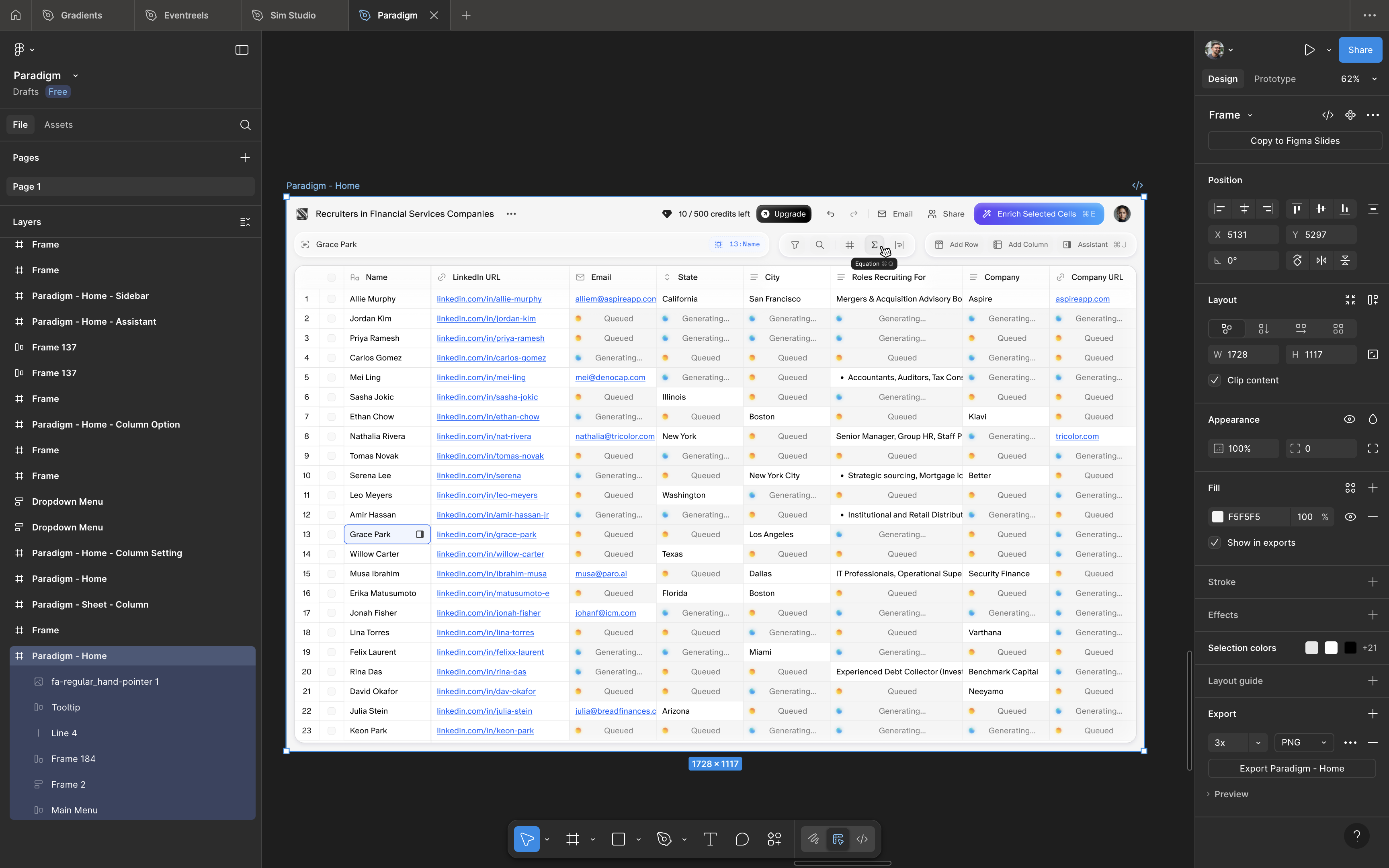
Prosper Redesigns

Looked at Figma

Analyzed Screenshot
Honestly, I like how clean and organized it is—feels efficient and easy to scan. But if you want it to feel a bit warmer (less spreadsheet-y), tossing in a few icons or a touch of color in the headers might make it pop more.
What do you think—is speed or vibe more important to you here?
Viewing Figma
Using Screenshot
Ask me about Prosper Redesigns...

Sonnet 4.6


Hume
Perplexity for personal memory · Link
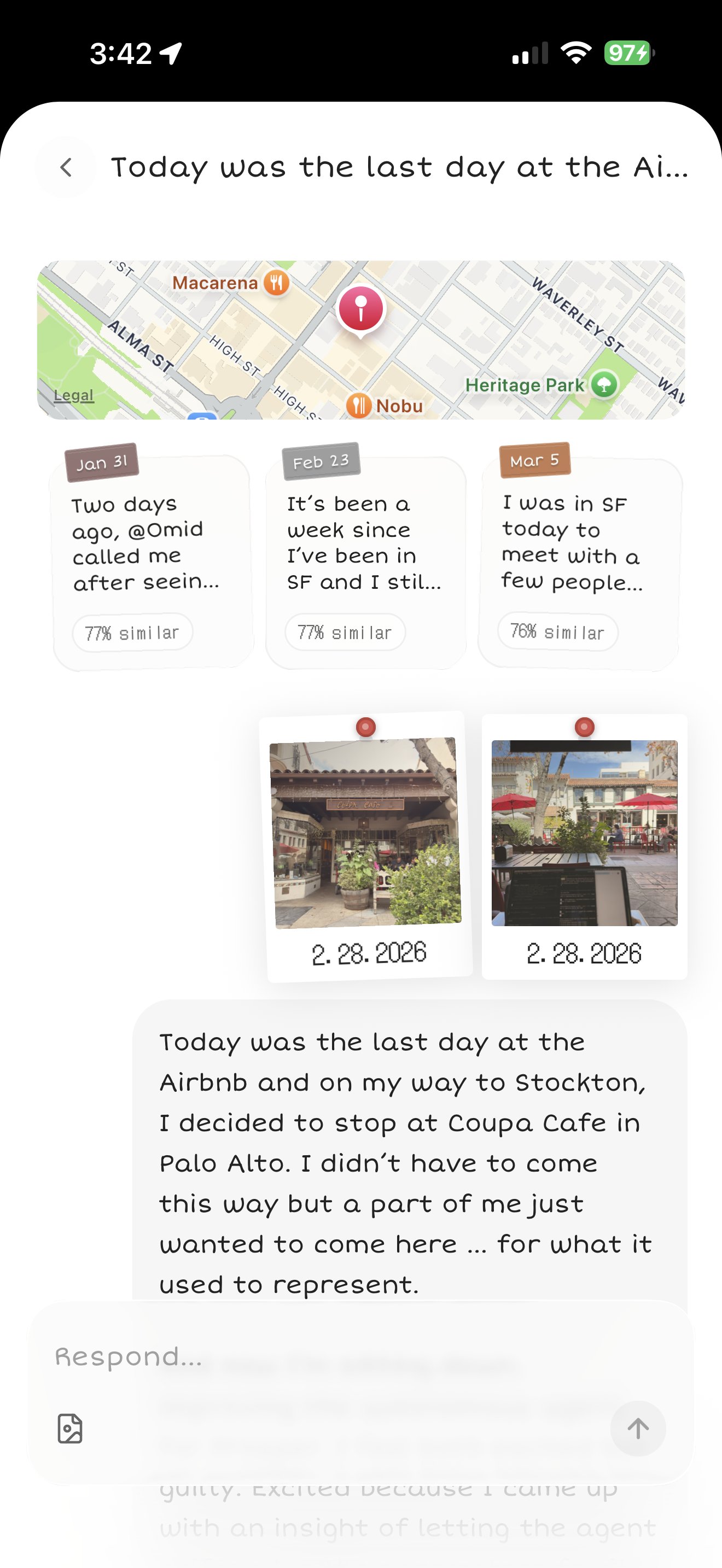
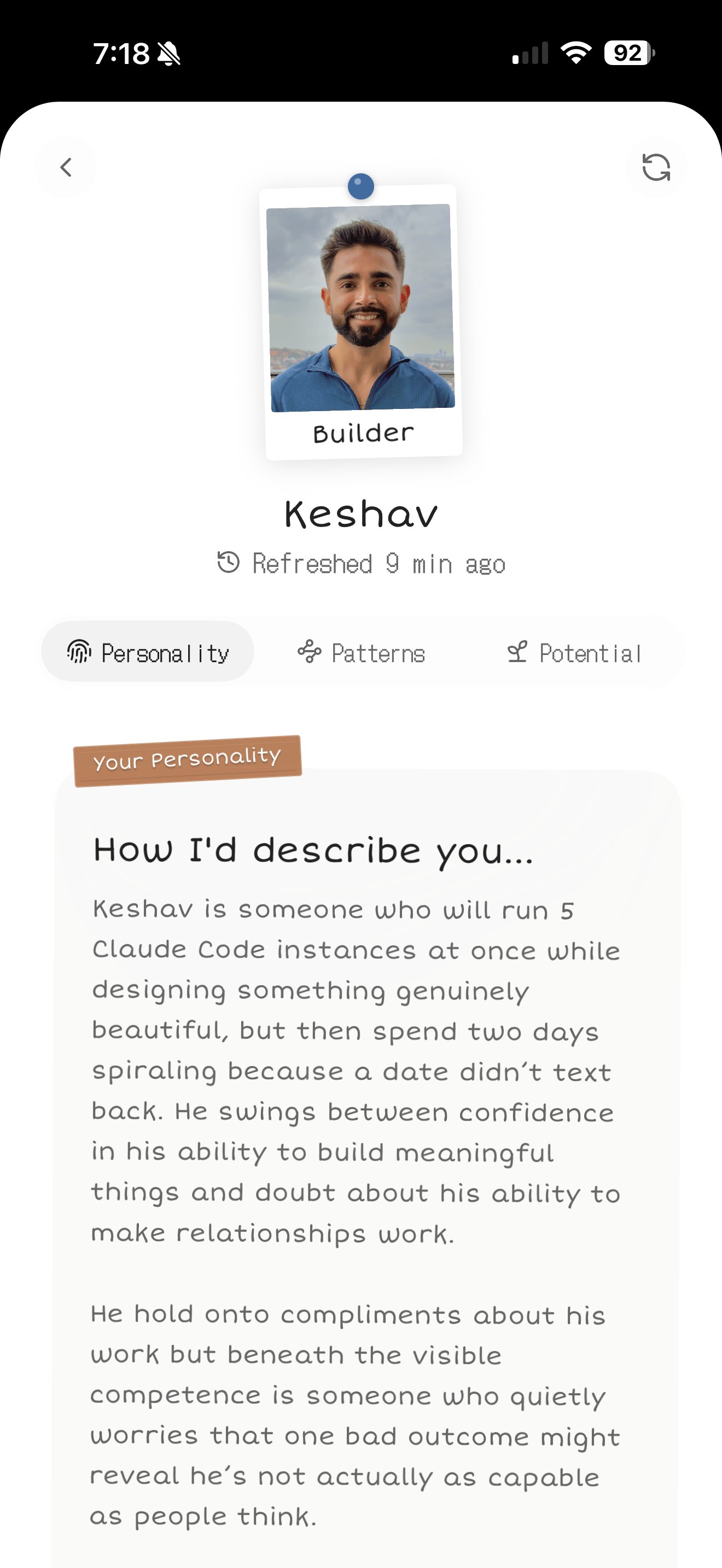
Hume is a RAG-powered journaling app for querying my own life – a new interface to personal memory.
It turns notes, photos, locations, and @mentions into structured memory: semantic matches, thinking patterns, relationship summaries, and a dynamic social graph of the people around me.
The end goal is Perplexity for personal context: a life app that gets me, analyzes me, and evolves with me.
.jpeg)